


What is actually on the packaging?
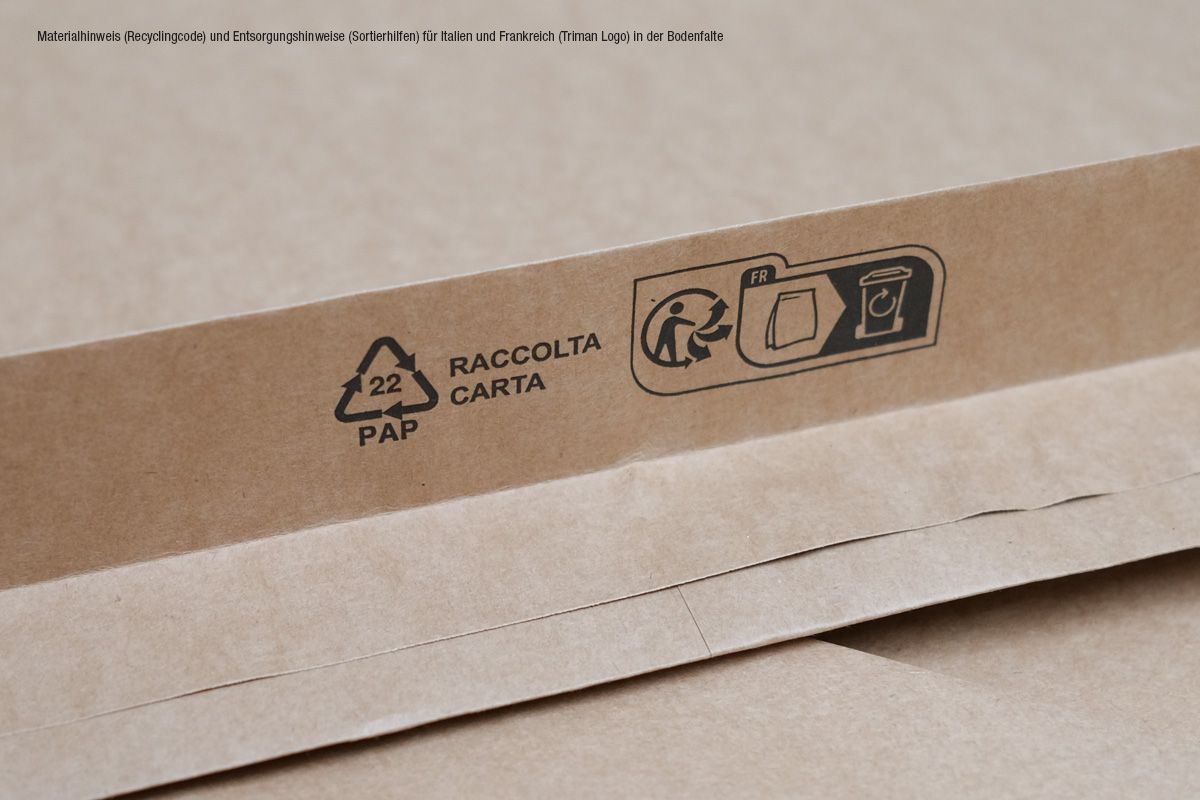
The Triman logo, a trash can, glass and fork, materials, and quality marks… Every icon on a package represents an organization, a standard, and/or a system. And every icon has its own rules: What is the minimum size? How much white space? Is it allowed in one color or only in the official corporate identity colors? Which version applies to which country? Some quality marks prohibit placement next to competing icons. Others require a minimum distance from the product information. And the font size in relation to the mandatory information is also established.
All those exceptions make the work prone to errors. It requires sound knowledge of the rules and the exceptions.
Every country its own rules
Anyone who brings a product to market in several European countries is faced with different requirements per country. One country mandates an indication of origin, another does not. Here, the type of material is mandatory, there it is recommended. And then the sorting instructions: every country has its own sorting instructions, its own symbols, and its own language.
That means that one product sometimes requires multiple label versions. And every version must be correct. Not approximately. Exactly. Because non-compliant packaging is a no-go!
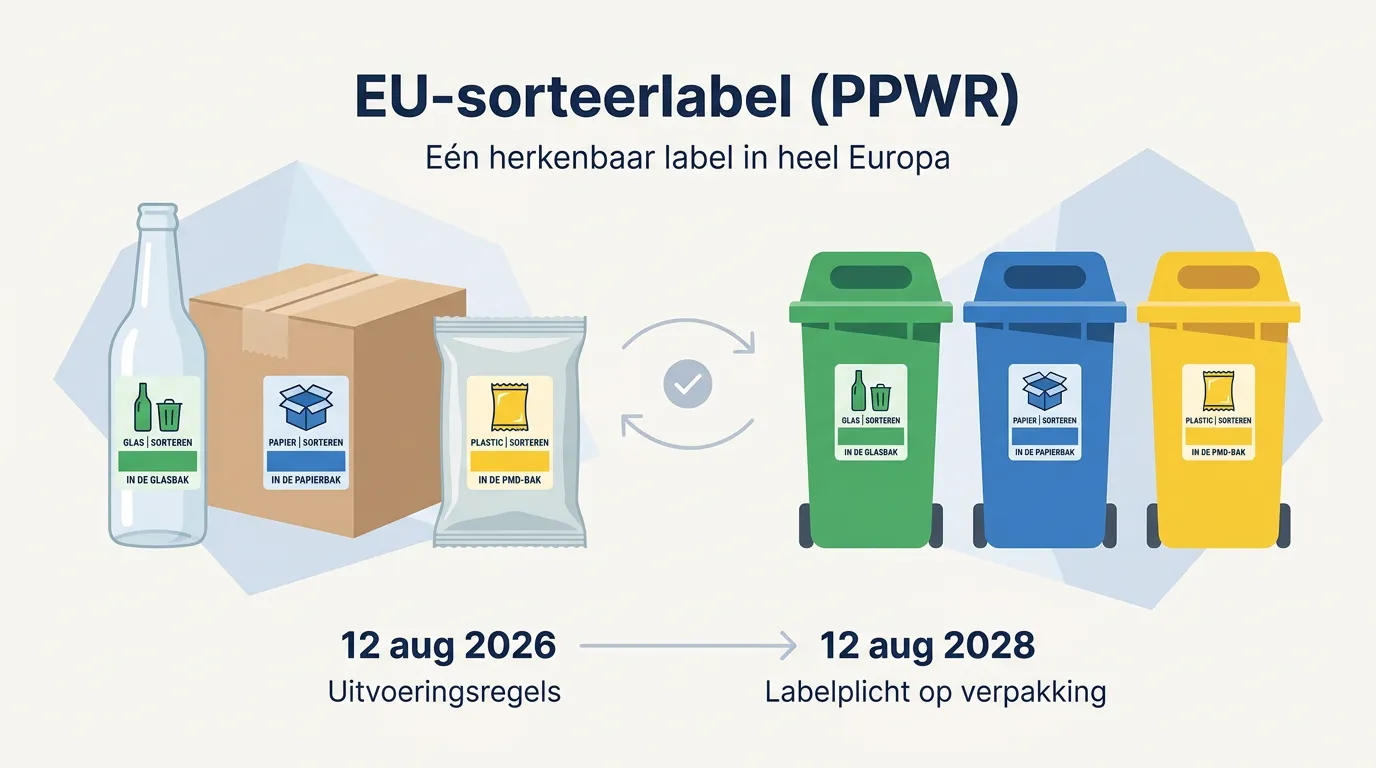
New legislation: how do you handle it?
Size versus information: what fits?
It is perhaps the biggest design challenge: packaging that is compliant and looks slick. A small package. A lot of mandatory text. Multiple languages. And then a brand that wants to remain visible. And the smaller the packaging surface, the stricter the prioritization. Because everything does not fit. So what can be removed? What can be smaller? What can go to the back? Answering those questions requires more than layout skills. Those who know that a mild chemical classification does not mandate hazard pictograms—but the associated phrases are—can manage space. Those who do not know this stick everything on the packaging. You then lose precious space that your brand needs to stand out.
In addition to all the regulations, there is also the creative work, and that requires a critical eye: are the font sizes correct, is the use of color in line with the brand toolkit, do the visuals breathe the brand?
Exceptions are the rule
Sounds contradictory. But anyone who has ever launched a product knows: it is rarely the big decisions that delay a process. It is precisely the small unexpected things. And then the ‘time’ factor weighs even more heavily.
Cindy compares an artwork process to a renovation. All disciplines come together on the label. It is just like building a house: expect the unexpected. Because those unexpected hurdles are not the exception, but the rule. They jeopardize the planning. As the connecting link, the artwork coordinator oversees the chain, from purchasing and design to regulations and the printer, and can switch quickly to ensure that delivery times are not compromised. Deadlines are part of it; together we ensure they remain achievable.
Contact
Curious about what Cindy can do for your artwork process? Please contact us.